
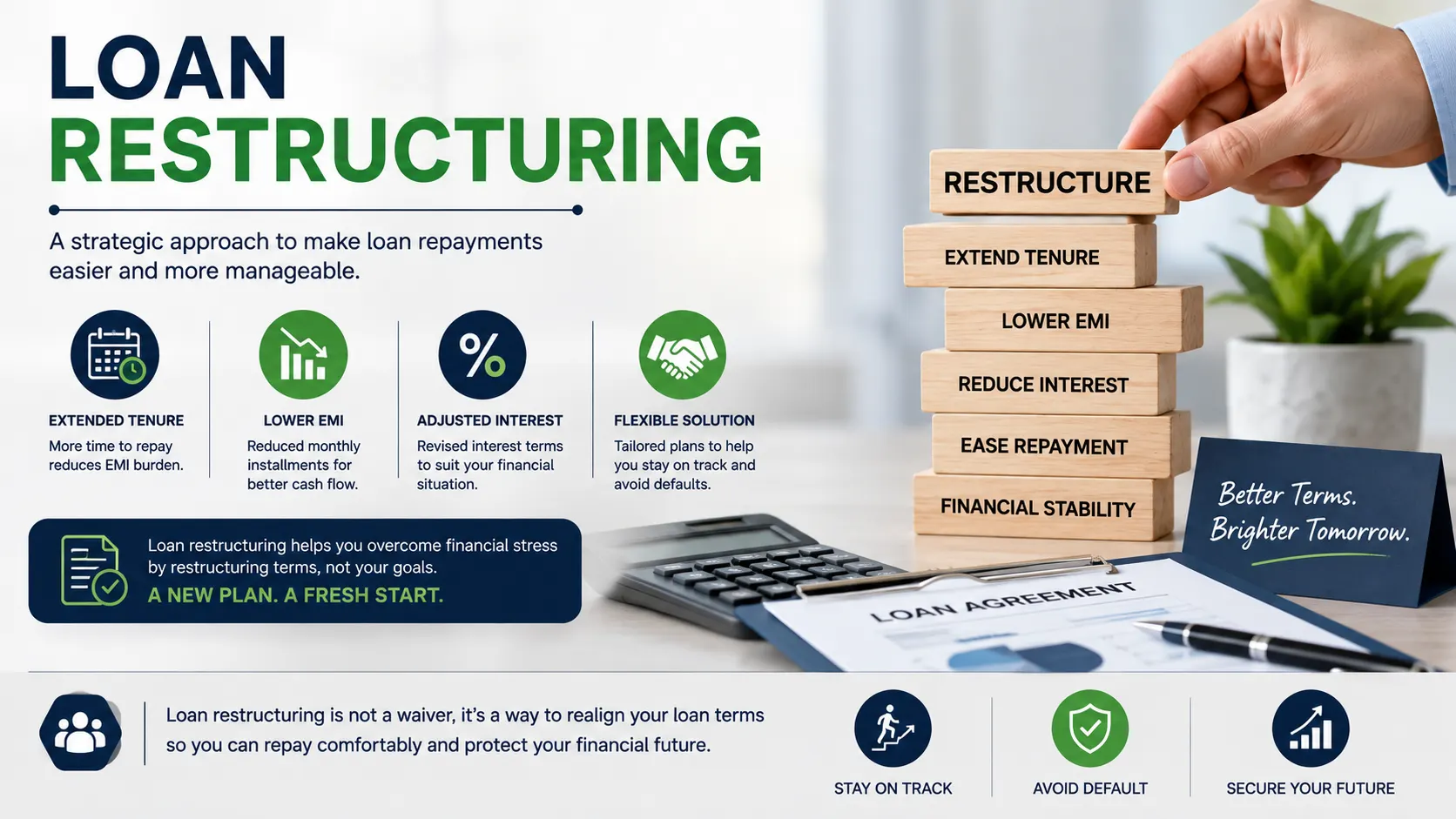
Restructuring refers to a revision of the existing terms of a loan, such as the tenure, interest rate, or instalment amount, undertaken with the objective of rendering repayment more manageable. Critically, the borrower remains obligated to repay the full principal amount over time.
When it is appropriate:
● The borrower has experienced a temporary setback, such as job loss or reduced income, but retains a reasonable prospect of financial recovery.
● The borrower wishes to preserve a favourable credit history and intends to continue availing of credit facilities in future.
Key considerations:
● The Reserve Bank of India periodically issues frameworks under which lenders are required to offer restructuring to genuinely distressed but viable borrowers.
● Restructuring generally has a comparatively limited adverse impact on the borrower’s credit score, particularly where undertaken proactively and in consultation with the lender.
● The overall interest outlay may increase where the tenure is extended, notwithstanding the reduction in the immediate instalment burden.
Loan Settlement
Settlement involves closing the loan account for an amount less than the total outstanding sum, typically pursued once the account has already fallen into default or has been classified as a Non-Performing Asset.
When it is appropriate:
● The borrower has genuinely lost the capacity to repay the loan in full, and restructuring is no longer a viable option.
● The borrower is in a position to arrange a lump-sum payment, even if lower than the total amount owed.
Key considerations:
● A settled account is ordinarily reported to credit information bureaus as “settled” rather than “closed,” a distinction that may adversely affect the borrower’s credit score for a period of years.
● Settlement should be documented in writing, with the lender’s confirmation that no further claims shall be raised upon completion of payment.
● Mechanisms such as Lok Adalat and One-Time Settlement (OTS) schemes offered by banks may facilitate a formal and legally binding settlement.
Bankruptcy and Insolvency Proceedings
Where the borrower’s financial position has deteriorated to the extent that neither restructuring nor settlement is feasible, insolvency proceedings, whether under the Insolvency and Bankruptcy Code, 2016, in respect of eligible entities and individuals, or other applicable statutory frameworks, may become necessary.
When it is appropriate:
● The borrower’s total liabilities substantially exceed their assets and repayment capacity, across multiple lenders.
● Other avenues of resolution have been genuinely exhausted.
Key considerations:
● Insolvency proceedings carry the most severe and long-lasting impact upon the borrower’s credit profile and future borrowing capacity.
● The process is considerably more formal, time-consuming, and typically requires sustained legal representation.
● Certain categories of debt, and specific procedural requirements, apply distinctly to individuals as opposed to corporate entities, and specialist legal advice is essential in navigating this route.
Loan Restructuring vs. Settlement vs. Bankruptcy: Choosing the Right Path
When a borrower finds repayment of a loan to be unsustainable, three principal legal avenues typically present themselves: restructuring, settlement, and, in more severe circumstances, insolvency or bankruptcy proceedings. Each of these mechanisms carries distinct implications
for the borrower’s finances, credit standing, and future borrowing capacity. This article examines the three options in turn, so as to assist borrowers in identifying the course most appropriate to their circumstances.
Loan Restructuring
Restructuring refers to a revision of the existing terms of a loan, such as the tenure, interest rate, or instalment amount, undertaken with the objective of rendering repayment more manageable. Critically, the borrower remains obligated to repay the full principal amount over time.
When it is appropriate:
● The borrower has experienced a temporary setback, such as job loss or reduced income, but retains a reasonable prospect of financial recovery.
● The borrower wishes to preserve a favourable credit history and intends to continue availing of credit facilities in future.
Key considerations:
● The Reserve Bank of India periodically issues frameworks under which lenders are required to offer restructuring to genuinely distressed but viable borrowers.
● Restructuring generally has a comparatively limited adverse impact on the borrower’s credit score, particularly where undertaken proactively and in consultation with the lender.
● The overall interest outlay may increase where the tenure is extended, notwithstanding the reduction in the immediate instalment burden.
Loan Settlement
Settlement involves closing the loan account for an amount less than the total outstanding sum, typically pursued once the account has already fallen into default or has been classified as a Non-Performing Asset.
When it is appropriate:
● The borrower has genuinely lost the capacity to repay the loan in full, and restructuring is no longer a viable option.
● The borrower is in a position to arrange a lump-sum payment, even if lower than the total amount owed.
Key considerations:
● A settled account is ordinarily reported to credit information bureaus as “settled” rather than “closed,” a distinction that may adversely affect the borrower’s credit score for a period of years.
● Settlement should be documented in writing, with the lender’s confirmation that no further claims shall be raised upon completion of payment.
● Mechanisms such as Lok Adalat and One-Time Settlement (OTS) schemes offered by banks may facilitate a formal and legally binding settlement.
Bankruptcy and Insolvency Proceedings
Where the borrower’s financial position has deteriorated to the extent that neither restructuring nor settlement is feasible, insolvency proceedings, whether under the Insolvency and Bankruptcy Code, 2016, in respect of eligible entities and individuals, or other applicable statutory frameworks, may become necessary.
When it is appropriate:
● The borrower’s total liabilities substantially exceed their assets and repayment capacity, across multiple lenders.
● Other avenues of resolution have been genuinely exhausted.
Key considerations:
● Insolvency proceedings carry the most severe and long-lasting impact upon the borrower’s credit profile and future borrowing capacity.
● The process is considerably more formal, time-consuming, and typically requires sustained legal representation.
● Certain categories of debt, and specific procedural requirements, apply distinctly to individuals as opposed to corporate entities, and specialist legal advice is essential in navigating this route.
Concluding Remarks
The appropriate course of action depends substantially upon the borrower’s specific financial circumstances, the nature and number of outstanding liabilities, and the likelihood of future financial recovery. Borrowers are strongly encouraged to seek professional legal and financial advice at the earliest indication of repayment difficulty, as early intervention frequently preserves a wider range of options than would otherwise remain available once an account has fallen significantly into arrears.