
Loan Settlement in India: Understanding the Process, Lok Adalat and Legal Options
Financial distress can arise due to various reasons, including loss of employment, medical emergencies, business losses, reduced income, or unexpected expenses. When loan repayments become difficult to manage, borrowers may consider loan settlement in India as a possible solution.
Loan settlement is a process through which a borrower and lender agree to resolve an outstanding loan on mutually acceptable terms. Depending on the circumstances and the lender’s policy, the settlement amount may be different from the total outstanding dues. However, borrowers should understand the financial, legal, and credit-related implications before choosing settlement.
What Is Loan Settlement?
Loan settlement generally refers to an arrangement where a lender agrees to accept an agreed amount to resolve an outstanding loan, subject to its approval and applicable policies. It is different from loan restructuring, where the borrower generally continues to repay the loan under modified terms such as a revised repayment schedule or other approved changes.
Loan settlement may be considered when:
- The borrower is facing genuine financial hardship.
- Repayment of the entire outstanding amount has become difficult.
- The loan account has gone into default or may have been classified as an NPA.
- The lender considers negotiated recovery a practical alternative to prolonged recovery proceedings.
Borrowers should also understand that a settled account may be reported differently from a fully repaid or closed account, which can affect future credit opportunities. Therefore, loan settlement should be considered carefully after evaluating other available repayment or restructuring options.
Lok Adalat for Loan Settlement
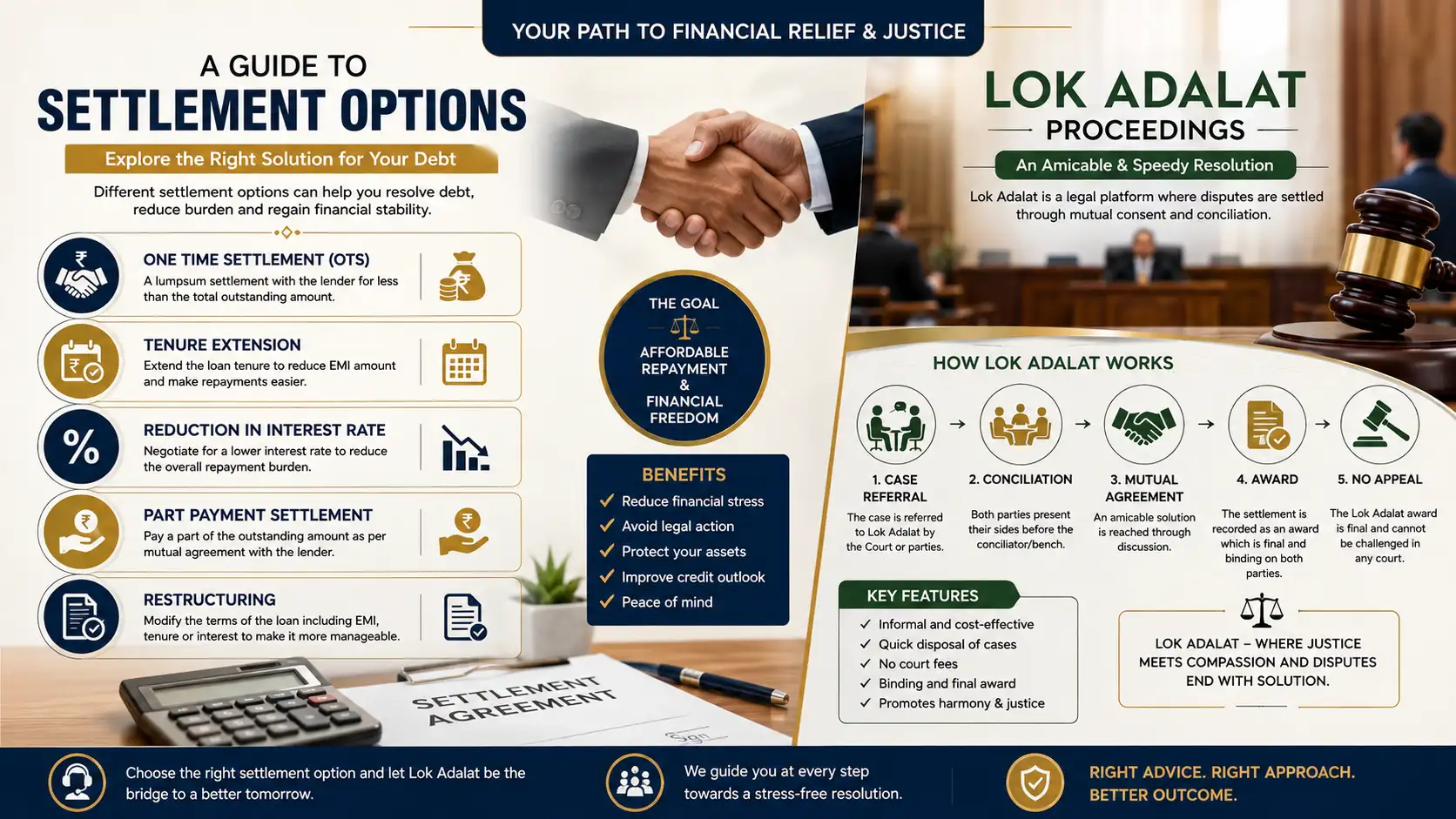
Lok Adalat is an important alternative dispute resolution forum established under the Legal Services Authorities Act, 1987. It provides a platform where borrowers and lenders can attempt to resolve disputes through conciliation and mutual settlement.
Banks, NBFCs, and other financial institutions may participate in Lok Adalat proceedings involving certain loan recovery matters and cheque dishonour cases.
For borrowers searching for loan settlement assistance, Lok Adalat can provide an opportunity to negotiate a mutually acceptable resolution without the prolonged process of regular litigation.
Loan Settlement Process Through Lok Adalat
The general loan settlement process through Lok Adalat may involve the following steps:
- Referral of the Case: A pending dispute may be referred to Lok Adalat by the concerned court, lender, or other authorised process.
- Notice to the Parties: The borrower and lender receive information regarding the date and venue of the proceeding.
- Negotiation: Conciliators facilitate discussions between both parties to explore mutually acceptable settlement terms.
- Settlement Award: If an agreement is reached, the terms are recorded in an award in accordance with the applicable legal framework.
- Compliance: The borrower must fulfil the agreed payment conditions within the specified timeline.
The exact procedure and availability of settlement depend on the nature of the case and the applicable rules.
Benefits of Loan Settlement
A properly negotiated bank loan settlement may provide several practical benefits for eligible borrowers:
- It may help resolve prolonged loan disputes.
- It can provide a structured way to negotiate outstanding dues.
- It may reduce the immediate financial burden where the lender agrees to settlement terms.
- It can help bring legal or recovery proceedings toward resolution.
- It provides documented settlement terms between the borrower and lender.
However, loan settlement is not guaranteed, and lenders are not obligated to accept every settlement proposal.
Other Loan Settlement and Debt Relief Options
Lok Adalat is not the only option available to borrowers. Depending on the loan type, lender, and stage of recovery, other mechanisms may also be relevant.
One-Time Settlement (OTS)
A One-Time Settlement (OTS) is a negotiated arrangement offered by some banks and financial institutions to resolve eligible outstanding loan accounts, particularly certain stressed or NPA accounts. The terms depend on the lender’s applicable policy and approval process.
Loan Restructuring
Loan restructuring may be considered where the borrower has repayment difficulties but may be able to continue servicing the loan under revised terms, subject to lender approval and applicable regulations.
Debt Recovery Tribunal (DRT)
The Debt Recovery Tribunal (DRT) deals with certain debt recovery matters involving banks and financial institutions under the applicable legal framework. Borrowers involved in recovery proceedings should understand their rights and available remedies.
SARFAESI Proceedings
For certain secured loans, the SARFAESI Act, 2002 provides mechanisms for enforcement of security interests by eligible secured creditors, subject to the statutory framework and remedies available to borrowers.
Important Tips Before Loan Settlement
Before entering into a loan settlement agreement, borrowers should take the following precautions:
- Obtain all settlement terms in writing.
- Verify the final settlement amount and payment deadline.
- Understand the potential impact on your credit profile.
- Keep copies of all correspondence and payment records.
- Obtain appropriate confirmation or a no-dues document after fulfilling the agreed terms.
- Do not ignore notices from courts, lenders, or Lok Adalat.
- Seek professional loan settlement legal advice before signing important settlement documents.
Borrowers should never rely solely on verbal assurances. The final settlement terms should be clearly documented and issued through the appropriate lender process.
Loan Settlement Assistance from Upturn United Consultancy Pvt. Ltd.
Upturn United Consultancy Pvt. Ltd. provides professional loan settlement assistance in India for individuals and businesses dealing with financial difficulties and outstanding loan obligations.
The firm assists clients in understanding their loan position, organising relevant documentation, communicating with lenders, and navigating the loan settlement process. Its broader expertise in banking and finance advisory, corporate law, drafting, arbitration, and litigation support allows clients to receive a more comprehensive approach to financial and legal challenges.
For borrowers considering bank loan settlement, debt settlement, OTS, or other debt relief options, professional guidance can help them understand the available routes and their potential implications.
Conclusion
Loan settlement in India can be a potential option for borrowers facing genuine financial hardship, but it should be approached carefully. Depending on the circumstances, borrowers may consider loan settlement, debt settlement, One-Time Settlement, loan restructuring, or appropriate legal remedies.
Lok Adalat can provide an accessible forum for eligible disputes to be resolved through conciliation and mutual agreement. Understanding the loan settlement process, maintaining proper documentation, and obtaining professional guidance can help borrowers make more informed decisions.
Upturn United Consultancy Pvt. Ltd. supports clients with professional loan settlement assistance, debt management, banking and finance advisory, and related legal services, helping them navigate complex financial situations with greater clarity.